Shirley Chisholm
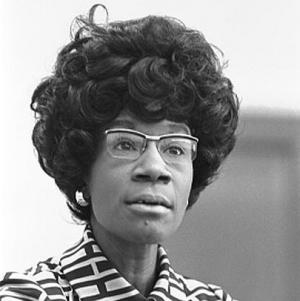
With deep involvement in her Brooklyn community as an educator and local politician, Shirley Anita St. Hill Chisholm made history as a catalyst for change.
Chisholm was the first African American woman in Congress (1968) and the first woman and African American to seek the nomination for president of the United States from a major political party (1972).
Her motto and title of her autobiography—Unbought and Unbossed—illustrates her outspoken advocacy for women and minorities throughout her career and during her seven terms in the U.S. House of Representatives.
“If they don’t give you a seat at the table, bring a folding chair.”
Shirley Chisholm, 1968
Brooklyn, Barbados, and Brooklyn Again
Shirley Anita St. Hill Chisholm was born in Brooklyn, New York, on November 30, 1924. She was the oldest of four daughters in a Barbadian immigrant family. Her father, Charles St. Hill, was born in British Guiana. As a Black immigrant in Brooklyn, he faced discrimination when searching for work, and at the time of Shirley’s birth, he was a bakery assistant at night and a factory worker by day. He had only received the equivalent of a fifth-grade education, but he was remarkably self-educated on Black history and politics. He was a union man, and proud of it; at home he taught his daughter the importance of political engagement from an early age. Her mother was Ruby Seale St. Hill, who was born in Barbados. She worked as a seamstress and a maid in the homes of New York’s white upper-middle class. She and Charles did the best they could to support their daughters’ educations, which for much of their childhoods, meant sending them away to live in the Barbados with their grandmother and aunt.
Chisholm lived in the Barbados from the age of four until the age of ten. Her days were filled with attending classes in the rigorous one-room schoolhouse on her grandmother’s island, helping her aunt with the market goods, and running on the beach. In 1934, she and her sisters moved back to Brooklyn after her parents found stable employment. Her Barbadian roots remained core to her identity, not only because of her aversion to the cold, but also for her accent which she kept throughout her life and the cultural values she held for education and community.
Back in Brooklyn, Chisholm adjusted to living in a racially divided society. For most of her childhood in the Barbados, Chisholm had been in classrooms and communities where everyone around her looked like her. She experienced segregation of schools and of public spaces for the first time now that she and her siblings were back in America.
Her parents continued to prioritize their daughters’ educations by providing them with opportunities to grow. Christmas and birthday presents were always books. Her mother would take them to the library on her day off, which was every other Saturday, so that they could read as much as they wanted. Her parents saved money to buy a second-hand piano and pay for music lessons for Shirley and her sisters. Their hard work paid off, and in 1942 Chisholm graduated from Brooklyn Girls’ High School with offers to attend both Vassar and Oberlin Colleges. Unfortunately, the family could not afford the out-of-town room and board, much to Chisholm’s disappointment. She found a place instead at the tuition-free Brooklyn College, where she thrived despite challenges due to prejudice towards Black students.
Chisholm majored in Sociology and minored in Spanish, a language that would serve her well throughout her career. She was active in the debate team and the Harriet Tubman Society, through both groups she advocated for greater equality and visibility for her fellow Black students. She graduated cum laude in 1946.
Making Change: Career as Educator and Beginnings in Politics
After graduating, Chisholm worked as a nursery schoolteacher. She faced difficulty finding a position, despite her qualifications for teaching due to racial tensions in America. Potential employers would call her in to interview then immediately reject her once the supervisor realized that she was Black. She finally found a teaching position at Mt. Calvary Child Care Center in Harlem, where she would work until 1953.
While starting her career, she met Conrad Q. Chisholm, a private investigator who had moved from Jamaica to the U.S. in 1946. The two married in a large Barbadian-style wedding in 1949. She earned a master’s degree from Columbia University in early childhood education in 1951. She worked her way up in the early childhood care field, as director of the Friend in Need Nursery until 1954, and later as the director of the Hamilton-Madison Child Care Center until 1959. From 1959 to 1964, she became educational consultant for the Division of Day Care in New York City’s Bureau of Child Welfare, where she oversaw ten childcare centers and developed new centers.
Ever aware of racial and gender inequality, in her time as a childcare professional she joined local chapters of the League of Women Voters, the National Association for the Advancement of Colored People (NAACP), the Urban League, and the Democratic Party club in Bedford-Stuyvesant, Brooklyn. She often clashed with organization members, challenging their dismissal of women’s contributions to their causes. In 1960, she joined the Unity Democratic Club (UDC) and quickly became a leader and a figure that other members respected. In 1964, when UDC discovered Thomas R. Jones did not seek re-election in the New York State Legislature, Chisholm did the unthinkable: She ran for the seat herself.
New York State Legislature
Chisholm faced an uphill battle to receive the Democratic party nomination for the state legislature seat. The UDC was hesitant to back her, as a female candidate, and many in the community dismissed her interest in politics. In her memoir, she recounted a comment made to her by an older man in her neighborhood as she collected signatures for her nomination:
“Young woman, what are you doing out here in this cold? Did you get your husband’s breakfast this morning? Did you straighten up your house? What are you doing running for office? This is something for men.” Shirley Chisholm in Unbought and Unbossed, (1971).
She responded by calmly explaining her experiences as a Black woman and ideas to better the community, which ultimately earned his signature.
Chisholm won the Democratic nomination, marking her first political success, but at a time of great loss for her and for family. Her father died suddenly in the summer of 1963, leaving all of his money in a trust for Shirley and the house for his wife and other daughters. The grief of losing her first mentor and champion caused an irreparable rift between Chisholm and the rest of her family.
Chisholm persevered through discrimination and familial loss. In 1964, Chisholm ran for and became the second African American in the New York State Legislature. While in office, she proposed and passed bills that continue to impact New York State to this day, including the creation of the SEEK (Search for Elevation, Education, and Knowledge) program, which provides scholarships to Black and Hispanic students to attend New York public universities, job protection for teachers who take maternity leave, and expanding unemployment insurance coverage to domestic workers. As a former public-school student, an educator, and the daughter of a domestic worker, efforts to make her community better was personal. During this period, she also became a member of the National Organization for Women (NOW), which would shape her later political outlook.
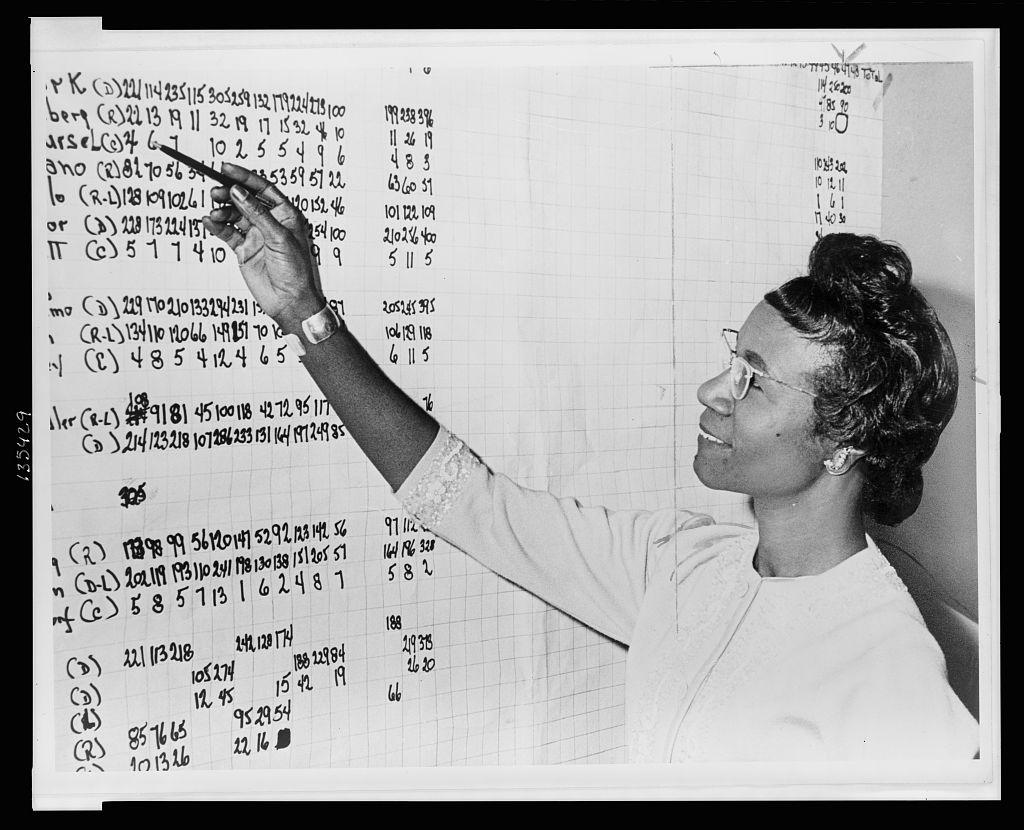
Figure 1. Shirley Chisholm looking over poll numbers, 1965.
Bid for United States Congress
In 1968, a court-ordered redistricting plan created a new, heavily Democratic, congressional district in Chisholm’s neighborhood. Chisholm saw the opportunity to enact further change, this time at a national level. Rumors flew that she was going to launch a campaign for Congress, but she was unsure if she could get the support of her local political parties.
One interaction with a constituent and a member of her community strengthened her resolve. On a cold February day, an elderly woman knocked on her door and gave her an envelope of money she had collected for her congressional campaign, totaling $9.62. Overcome by the gesture, Chisholm promised her: “I know what this money means to you. We’ll make it together—you and I.” Later that night, she recalled to her husband, “That woman has probably spent her whole life as a domestic. she could have been my own mother... women like that are worth more to me than the opinions of a thousand politicians.”
Her slogan “Unbossed and Unbought,” reflected her community-centered approach to campaigning. Her public speaking abilities, shaped by her education and by her charisma, magnetized her campaign and helped her to gain the traction that she needed. Chisholm sought—and won—a seat in Congress as Representative of New York’s 12th District. Her opponent, James Farmer, whom she later became friends with, remarked at the time: “[In history] I had a most unique distinction: I was the first black man in U.S. history to be defeated by a woman in a congressional race.”
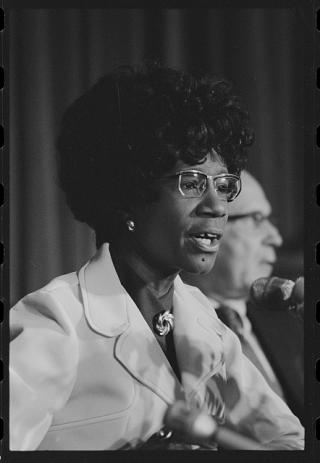
Figure 2. Shirley Chisholm speaking in Congress, 1971.
“People had to know that it was possible for someone with decency and a fighting spirit to overcome the system by beating it with its own weapons.” Shirley Chisholm, 1970 (National Museum of African American History and Culture).
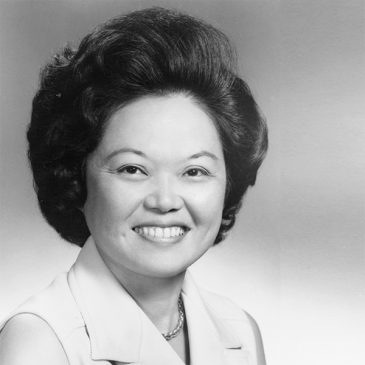
Of the ten women in the Ninety-first Congress, the only other woman of color was Patsy Mink of Hawai’i, who as Japanese American and the first woman of color to be elected to Congress (in 1965). Once sworn into the House of Representatives, “Fighting Shirley” introduced more than 50 pieces of legislation and championed racial and gender equality, the plight of the poor, and ending the Vietnam War. While she faced pressure to hire an all-Black staff for her office, she instead hired only women of all backgrounds. Chisholm also joined the Congressional Black Caucus (CBC), composed of nine other members, all of which were men. While many supported Chisholm’s political visibility, she often felt out of place in that group as the only woman.
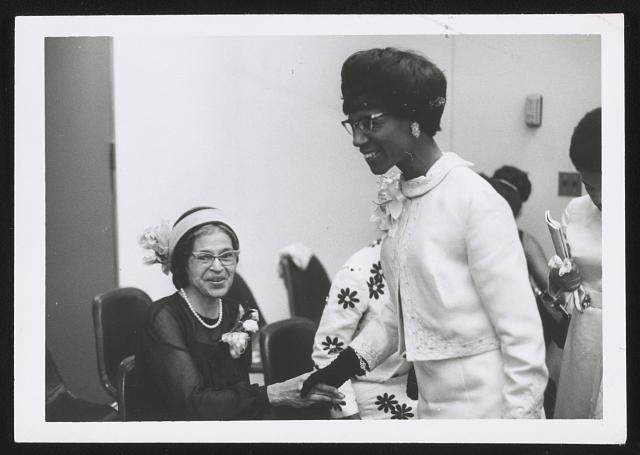
Figure 3. Congresswoman Shirley Chisholm meeting Rosa Parks.
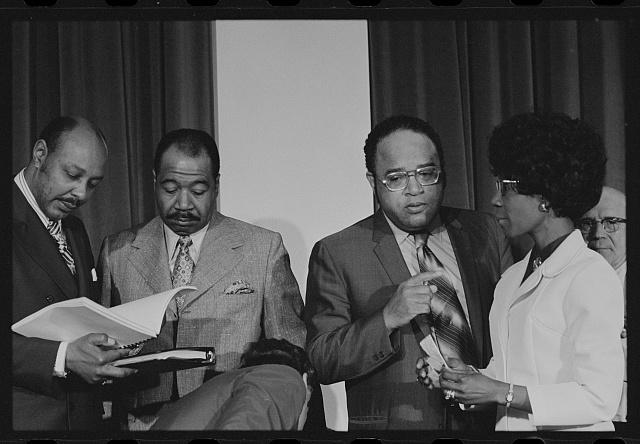
Figure 4. Shirley Chisholm with Congressional Black Caucus, 1971.
Presidential Run in 1972
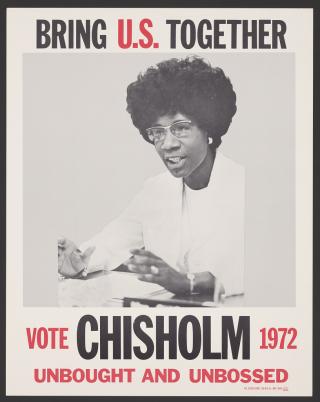
Figure 5. Shirley Chisholm presidential campaign poster.
“I am not the candidate of Black America, although I am Black and proud. I am not the candidate of the women’s movement of this country, although I am a woman, and am equally proud of that. I am not the candidate of any political bosses or fat cats or special interests.... I am the candidate of the people of America.” Shirley Chisholm, Presidential Campaign Announcement. Brooklyn, New York. Jan 24, 1972.
Chisholm began working towards a presidential campaign in 1971 and announced her candidacy in January 1972. Discrimination followed Chisholm’s quest for the 1972 Democratic Party presidential nomination. She was blocked from participating in televised primary debates, but after taking legal action, was finally included in one debate in June of 1972. Her campaign was notoriously underfunded, and she was largely regarded by the media as a symbolic political figure and not a legitimate candidate. Indeed, from the beginning she had no personal hopes of winning the presidency. Instead, Chisholm hoped to open the way for others after her to have political involvement, and to gain delegates in order to steer the agendas at the Democratic National Convention with her power.
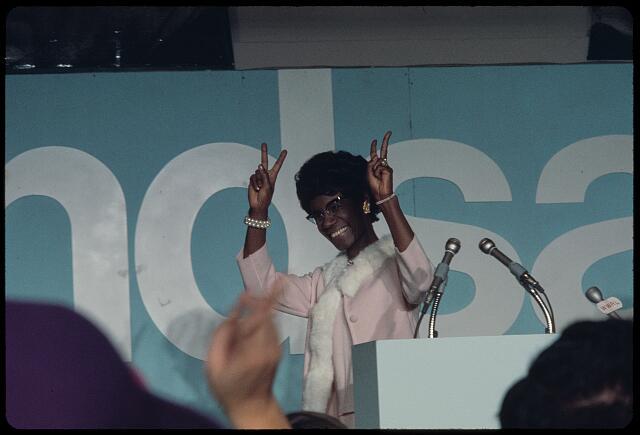
Figure 6. Shirley Chisholm on campaign trail, 1972.
Students, women, and minorities followed the “Chisholm Trail.” She entered 12 primaries and garnered 152 of the delegates’ votes (10% of the total)—despite an under-financed campaign and contentiousness from the predominantly male Congressional Black Caucus.
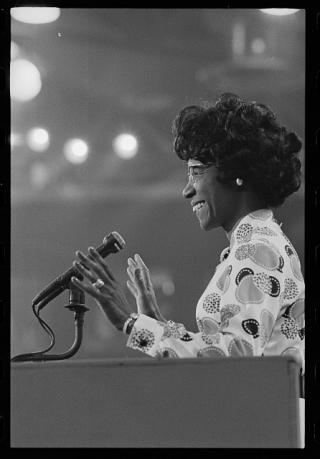
Figure 7. Shirley Chisholm at the Democratic National Convention in 1972.
Chisholm never regretted her presidential run and hoped that it would be a catalyst for change, not only in who would run for political office, but bring issues up for debate in the larger political conversation.
“I ran because somebody had to do it first. In this country everybody is supposed to be able to run for President, but that’s never been really true. I ran because most people think the country is not ready for a black candidate, not ready for a woman candidate. Someday...” Shirley Chisholm, from Shirley Chisholm: Catalyst for Change.
Later Career in Congress and Mount Holyoke College
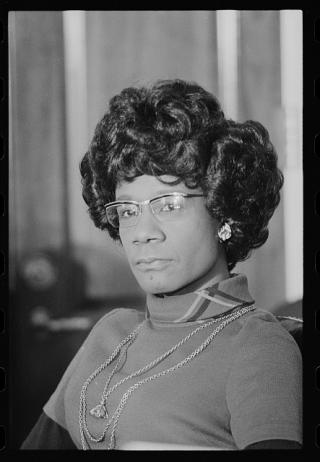
Figure 8. Shirley Chisholm in 1973.
Despite her loss in the 1972 primary, Chisholm maintained her seat in the House of Representatives and would serve for another decade. In 1974, a Gallup poll revealed that she was among the top ten most admired women in the country, alongside Jacqueline Kennedy Onassis and Coretta Scott King. In 1977, she became the first Black woman and second woman ever to serve on the powerful House Rules Committee. That same year she married Arthur Hardwick Jr., a New York State legislator.
After her tenure of service, Chisholm retired from Congress in 1983. She taught Sociology and Political Science at Mount Holyoke College and co-founded the National Political Congress of Black Women. In 1991, she moved to Florida and later declined the nomination to become U.S. Ambassador to Jamaica due to poor health.
On her legacy, Chisholm said, “I want to be remembered as a woman who dared to be a catalyst of change.”
 Primary Source Analysis Strategies

Letter from Representative Shirley Chisholm to Chairman of the House Judiciary Committee Don Edwards
Thinking routine: Connect, Extend, Challenge
Read the letter and consider what you have just read.
- How are the ideas and information connected to what you already know? For example, do you know what the Equal Rights Amendment (ERA) is?
- What new ideas did you get about Chisholm or the ERA that broadened your thinking or extended it in different directions?
- What challenges or puzzles emerge for you? Why might this cause be important to Chisholm?
Shirley Chisholm Campaign Speech, 1972
Thinking routine: Think, Pair, Share
Watch the campaign speech. Give students a few minutes to think. Invite students to pair with a nearby student to share their thoughts:
- What rhetorical strategies does Chisholm use to make her points? Is it effective?
Shirley Chisholm Campaign Poster, 1972
Thinking routine: Claim, Support, Question
Look at the campaign poster.
- Is it, or is it not effective? Make a claim.
- Identify support (things you see, feel, know) for your claim.
-
Ask a question related to your claim or the supports.
Barron, James. “Shirley Chisholm, ‘Unbossed’ Pioneer in Congress, Is Dead at 80.” New York Times. Last modified January 3, 2005. https://www.nytimes.com/2005/01/03/obituaries/shirley-chisholm-unbossedpioneer-in-congress-is-dead-at-80.html
Chisholm, Shirley. Unbossed and Unbought: Expanded 40th Anniversary Edition. Brooklyn: Take Root Media, 2010.
Chisholm ’72: Unbossed and Unbought. DVD. Directed by Shola Lynch. 20th Century Fox, 2005. DVD.
Curwood, Anastasia C. Shirley Chisholm: Champion of Black Feminist Power Politics. University of North Carolina Press, 2023. http://www.jstor.org/stable/10.5149/9781469671192_curwood.
Curwood, Anastasia. “Resurrecting Shirley Chisholm from Symbol to Life.” Black Perspectives. June 1, 2022. https://www.aaihs.org/resurrecting-shirley-chisholm-from-symbol-to-life
Landers, Jackson. “Unbought and Unbossed: When a Black Woman Ran for the White House.” Smithsonian Magazine, April 25, 1016. https://www.smithsonianmag.com/smithsonian-institution/unbought-and-unbossed-when-black-woman-ran-for-the-white-house-180958699/
“Shirley Chisholm.” National Museum of African American History and Culture. Accessed December 9, 2025. https://www.searchablemuseum.com/shirley-chisholm
“Shirley Chisholm.” National Parks Service. Accessed December 9, 2025. https://www.nps.gov/people/shirley-chisholm.htm
“Shirley Chisholm.” National Women’s Hall of Fame. Accessed December 9, 2025. https://www.womenofthehall.org/inductee/shirley-chisholm
United States House of Representatives, History, Art and Archives. “Biography: Chisholm, Shirley Anita.” Accessed September 9, 2014. https://history.house.gov/People/Listing/C/CHISHOLM,-Shirley-Anita-(C000371)
Winslow, Barbara. Shirley Chisholm: Catalyst for Change. Boulder: Westview Press, 2013.
MLA — “Shirley Chisholm.” National Women’s History Museum, 2025. Date accessed.
Chicago — “Shirley Chisholm.” National Women’s History Museum. 2025. www.womenshistory.org/education-resources/biographies/shirley-chisholm.
Patsy Mink
Jeannette Rankin
Stacey Abrams